

Private Tutors for Dyslexia
Dyslexia affects around 10% of the United Kingdom’s population. Simply Learning Tuition provides one-to-one support through a team of highly experienced tutors, mentors, and SpLD qualified practitioners. With our support your child will strengthen their learning abilities and develop greater self-confidence in their education.
For parents of a child with a Specific Learning Difficulty (SpLD) such as dyslexia, navigating the educational journey can be particularly daunting. Keeping up with peers, managing relationships with school and indeed choosing the right school in the first place become more complex. However, with the correct support, your child’s strengths and talents can truly shine and their full potential be unlocked.
What is Dyslexia?
The British Dyslexia Association (BDA) defines dyslexia as a specific learning difficulty that primarily affects the skills involved in accurate and fluent reading and spelling. Unlike a learning disability (which affects baseline intelligence), an SpLD affects certain abilities used for learning: primarily, a pupil’s reading and writing skills. Dyslexia often co-occurs with other learning difficulties. For example, pupils with dyslexia may have difficulties with language, motor coordination, mental calculation, concentration and personal organisation. One of our resident dyslexia advisors, Lois Hood, offers a deeper definition of dyslexia here.

Common Signs of Dyslexia
Dyslexia primarily affects a pupil’s reading and writing skills. Co-occurring difficulties can also be seen in the pupil’s coordination, language, mental calculation, organisational skills, and memory. It is easier to discern symptoms when children first begin school, at the point when they start to focus on reading and writing. “Dyslexia is a combination of abilities as well as difficulties. It is the disparity between them that is often the give-away clue” (BDA). Such abilities often include aptitude in creativity, problem solving and communication.
There is a more detailed list of the signs of Dyslexia here.
What are the key challenges faced by students with dyslexia?
Students with dyslexia primarily tend to struggle with their literacy. As such, their self-esteem is often affected. This is heightened by the common misconception that dyslexia signifies low intelligence or learning ability. It can be disheartening for the child when they fall behind their peers and in their classwork. As such, children with dyslexia may perceive their SpLD as an alienating factor, and develop negative attitudes and disengagement in class. In older children and adults, disorganisation and forgetfulness comprise other key challenges with dyslexia. If undiagnosed or unrecognised, these symptoms can be misinterpreted as poor social behaviour. Studies have shown that those with specific learning difficulties such as dyslexia are more likely to experience poor mental health; feelings of anxiety, depression and low self-esteem.
There are many resources available, however, and even ones tailored towards those with specific learning difficulties. For example, GroOops, a Dyslexia Aware Counselling service. Please remember there is always someone to listen.

Expert View - Victoria Gallagher BA Hons, PGCE, pgcert SpLD
“I’m a real advocate of tutoring, because I think it can be much more bespoke and individualised for the child. Every client of mine who works with a tutor really benefits from that support - the children all have really meaningful relationships with their tutors. Their tutors are not solely there for academic support! They can act as a mentor, as a confidante, through that process.”
Victoria is an Education Consultant, Intervention Coordinator, Life Coach, and Specialist Dyslexia teacher. She is one of our SLT partners.
You may find this episode of the Simply Learning Tuition Podcast helpful:
Powered by RedCircle

How Simply Learning Tuition Can Help
Simply Learning Tuition wants to help you find the best support for your child. We believe that every child should have the opportunity to reach their full potential, no matter what educational challenges they face. If your child has dyslexia, it is highly likely that they will benefit from the support of a highly experienced SpLD private tutor. We introduce the highest calibre of private tutors for dyslexia, who have the experience and expertise to help your child develop their skills and flourish.
Many tutors also write about their experiences in this field and beyond; you may like to read Adam’s article in which he explains why dyslexia is no bar to success. Additionally, we have a network of additional support available from educational psychologists, executive function coaches and other SpLD specialists, to give parents a multifaceted program of support that will enhance their child’s confidence, happiness and academic progress. We also provide mentoring for one-to-one support and empowerment. These trained mentors offer close support in a pastoral sense, beyond their core qualifications in academic tutoring.
To discuss your child’s requirements, please contact us today.
Private Tutors for Dyslexia
Simply Learning Tuition provides specialist tuition for students with Dyslexia. Each of the tutors approaches learning in a way that is fun and tailored to each child. They will help to enhance your child’s education by creating a safe, non-judgemental environment that will improve confidence and results and rekindle a love of learning.

Alexa
Alexa tutors students for entrance exams from 7+ to 13+. She also prepares students for interviews and scholarship applications.

Amy HM
Amy is a qualified teacher and specialises in English tuition. She also tutors Maths and prepares students for the 7+ and 11+ entrance exams.

Annabel
Annabel specialises in working with children with specific learning difficulties such as dyslexia, focusing mainly on maths and English.

Arif
Arif tutors IB Maths, IB History and GCSE Maths. Additionally, he prepares students Oxbridge examinations and provides interview practice.

Dora
Dora specialises in 11+ and 13+ preparation and interview practice. She has extensive experience tutoring students with SEN.

Eddie
Eddie is a qualified teacher, specialising in Geography. He also has broad experience supporting EAL and SEND students.


Ewan
Ewan is a qualified teacher who specialises in Maths and Physics tuition up to A-Level. He also tutors Biology and Chemistry up to GCSE and prepares students for 13+ Exams.


James D
James specialises in Science tuition, along with Geography and Art. He has particular experience preparing students for 13+ exams.

Jenny S
Jenny is an SEN specialist who has a huge range of home schooling experience and tutors English, Maths, Geography, History and Science.

Leon
Leon tutors English and is an Entrance Exam specialist, teaching from 7+ through to 13+. Leon also teaches essay-based subjects such as History, Geography and Social Sciences.

Michael
With a BSc and MSc in the subject, Michael is an Economics specialist. Alongside this he tutors Maths in preparation for exams at 11+, 13+, GCSE, A Level and IB level.

Rebecca S
Rebecca is a qualified teacher who specialises in Mathematics and English tuition. She prides herself on making sure her students master the basics so they have a good foundation to build upon.

Rosemary
Rosemary is a multidisciplinary tutor, who specialises in SEN support. She also teaches English, Geography, History, 7+, 11+ and 13+ Entrance Exams.

Ross
Ross specialises in SAT and ACT Preparation, along with Ivy League College Applications.

Sarah
Sarah is an experienced, qualified teacher who tutors Spanish to GCSE and French to A Level.
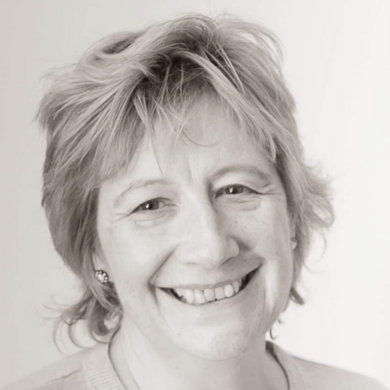
Sarah T
Sarah specialises in Religious Studies, preparing students for their GCSE and A Level exams. She is a highly experienced UCAS advisor and mentor and also assists with Philosophy and Theology Oxbridge entrance tests.

Shona S
Shona is a qualified teacher. She specialises in teaching English and maths, including preparation for competitive 11+ examinations.

Stamatia
Stamatia is a specialist in dyslexia and dyscalculia tutoring. As well as this, she can assess students for dyslexia.

Wiebke
Wiebke tutors French, English and German. She has experience home schooling students and also 11+ exam preparation.

Will M
Will specialises in science in Key Stage 2 and 3, as well as Biology GCSE. He also prepares students for 7+ and 11+ examinations.

“Russell is an intelligent, thoughtful and impressive young man. He has encountered some resistance from our son but is working through ways to deal with him and get to know him. We are impressed with his kind and gentle approach, through which he is starting to make some early progress”.
Mrs. C, Specific Learning Difficulties Mentoring
"Our tutor Laura is lovely and clearly holds the interests of SEN pupils to heart. She shows great fortitude and availability and plans her lessons insightfully."
Mrs. K, Year 7 Specific Learning Difficulties Tuition
Frequently Asked Questions
Is Dyslexia a common condition?
Dyslexia is far more common than people realise. As the NHS asserts, 'up to 1 in every 10 people in the UK has some degree of dyslexia', and yet the condition is often misunderstood. This is in part because it can be difficult to diagnose, as it does not solely affect a person's literacy.
Children and adults of any age and intellectual ability can be affected by dyslexia. It is not related to their general level of intelligence. It is so common that some of our tutors for dyslexia have the condition themselves, such as private tutor Adam, whose article you can read above.How can parents help their child with dyslexia?
The British Dyslexia Association (BDA) has extensive advice for parents, covering areas such as choosing a tutor, spelling, writing, reading and homework. Tips include reading together at night, ensuring your child sleeps enough, and establishing a homework routine emphasising 'little and often'. If needed, private tutors can create engaging and academically rigorous sessions for your child. Therefore, they are well suited to establishing your child's routine. The BDA highly recommends using a private tutor to help your child, both in their education, and in their wellbeing:
"A tutor is able to give individual attention and can set the pace of learning to suit your child. They can focus on the subjects that your child finds particularly difficult and will be able to identify your child's learning style, and therefore work to their strengths. Working with a tutor can also help to build a child's self-confidence."
Ultimately, students with specific learning difficulties benefit from a safe, non-judgemental environment such as one-to-one mentoring and tutoring provides. A private tutor is invaluable in shouldering the pressures of academic support and allowing you to spend more quality time with your child. Mentors and tutors also help your child to develop their confidence and self-esteem. Your child's confidence in their own learning abilities is fundamental to their ability to succeed. Tutors for dyslexia are therefore highly recommended for parents to help their children.
Is a private tutor helpful for children with dyslexia?
Put simply, yes! An academic tutor can be highly effective for dyslexic children. Because of the one-to-one interaction with your child, a tutor helps to strengthen their literacy, and increase their self-confidence as a result. Tuition is delivered by qualified and experienced tutors who have worked with a wealth of children with SpLD. One size certainly does not fit all and each tutor tailors their expertise to suit their student’s learning style, interests and abilities.
Does SLT only offer academic support for dyslexia?
Simply Learning Tuition offers bespoke support to help you and your child on their academic journey, including providing academic tuition. However, we also provide a range of approaches to help nurture and expand your child's full potential, such as through our mentoring programmes. Mentors can be used for both academic and pastoral support. Our mentors are usually younger, professional tutors who have been trained in this area, and can thus be a trusted advisor, role model and confidant.
How does screen time and technology affect dyslexia?
Technology is increasingly becoming more user-friendly for students with Specific Learning Difficulties (SpLD) such as dyslexia. Many phones and devices now come with speech-to-text functions. This is beneficial for many people with dyslexia who communicate better orally than when writing.
Many dyslexic students find the harsh white backlight of their devices too strenuous, as it exacerbates their reading difficulties. Nowadays, the majority of devices offer soft-light features, and yellow-toned screen-filters to counteract this. Moreover, the auto-correct feature is a simple but effective tool which helps many dyslexic students. Bespoke dyslexia-friendly apps such as 'Spell Better' and 'Dragon Dictate' also demonstrate the accessibility of technology for SpLDs.What is the Rose definition of dyslexia?
Often, resources and online guides use the ‘Rose’ definition of Dyslexia. This is used by the British Dyslexia Association as the official definition of the specific learning difficulty. The Rose Report (or Review) refers to a report made in 2009 by Sir Jim Rose. Sir Jim Rose's work is still used today as a framework to understand dyslexia more comprehensively. The Rose Report also offers parents and educators more effective ways to enhance their support of dyslexic children. For example, it provides the benefits of a one-to-one approach for students with dyslexia. Tutors for dyslexia are recommended to support your child.